As part of the Erasmus+ project Joint Mentorship: Better Cooperation for Better VET organized a study visit to Belgium from June 5 to 7, 2023. The study visit was attended by 8 participants from Croatia, 7 from Romania and 7 from North Macedonia. The participants had the opportunity to become better acquainted with the system of vocational education in Belgium, with a special emphasis on the dual education model, which was presented by Gunther de Geeter, deputy director of the secondary vocational school in Geraardsbergen. Given that the dual education model includes mostly practical classes with employers, it was interesting for the participants to gain an insight into the mentioned education system and to transfer experiences from examples of good practices to their own countries. In addition to the presentations, visits were organized to 3 companies active in dual education – Luc De Jong (electrical installations), Domocura (dry cleaning and interior cleaning company) and Stil Geluk (home for the elderly and infirm). The participants got to know the work of companies and the way in which they are involved in dual education and why it is important for them that students do apprenticeship in companies. Also, company representatives pointed out an example of good practice regarding the organization of classes in such a way that students stay at school on Mondays and Tuesdays, while on Wednesdays, Thursdays and Fridays they spend practical classes in companies. The participants gained insight into good practices and concluded through the discussion which practices could be implemented in their partner countries as well as how to improve the quality of vocational education in their countries. The participants of the study visit were teachers, mentors in trades and businesses, and representatives of stakeholders in vocational education from Croatia, North Macedonia and Romania.
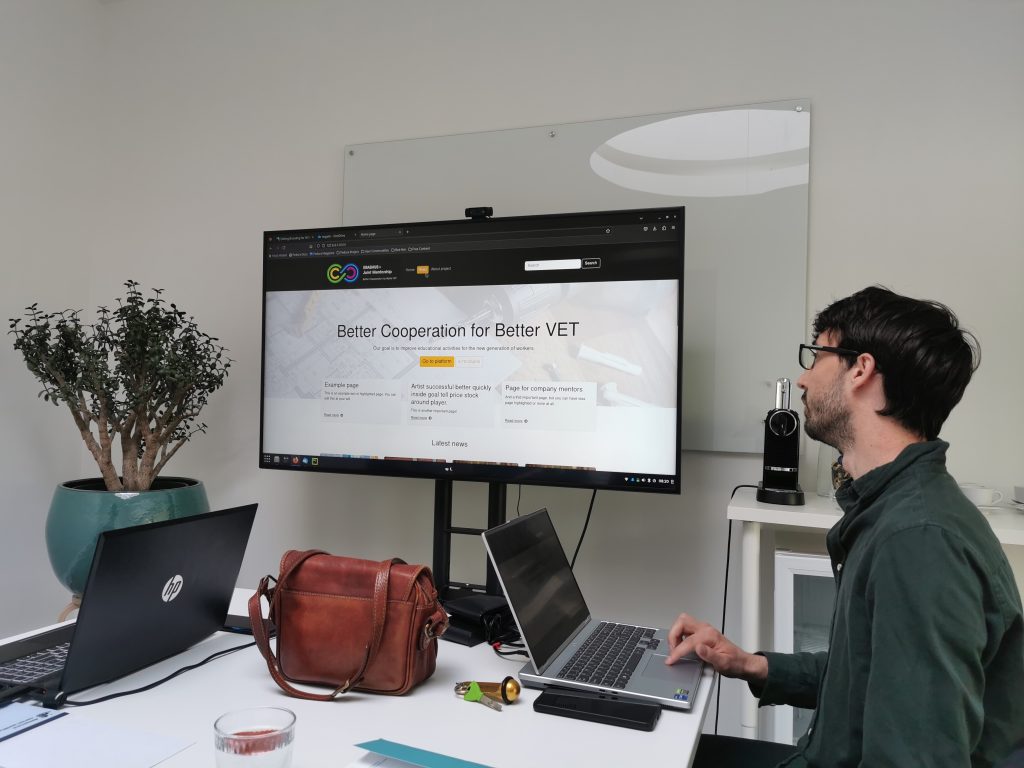
Also, after the study visit, a second partners meeting was held from June 8 to 9, where the partners presented the activities they have done so far in their countries, especially in connection with the thematic meetings organised, the aim of which was to improve the cooperation of stakeholders in vocational education. Furthermore, the framework for e-modules was presented, and the partners presented plans for the creation of e-module content through discussion. Also, the Croatian Chamber of Trades and Crafts offered help to partners from Romania regarding the development of a program for training mentors at employers, because such a program does not currently exist in Romania. Likewise, the Croatian Chamber of Trades and Crafts and the Faculty of Informatics and Digital Technologies presented the framework and roles in the e-platform and e-map of apprenticeships so that the other partners would become familiar with the framework and start planning their own activities from the mentioned work package. In addition to the above, the partners went through obligations regarding the management and monitoring of the project as well as project dissemination activities.
The aim of Joint Mentorship project is to improve the quality of vocational education and training specifically by improving cooperation between stakeholders in vocational education through the organization of seminars, trainings and workshops and the creation of Guidelines for better cooperation in vocational education with examples of good practice. Furthermore, it is intended to improve quality by designing and creating an e-map of apprenticeships, which would enable easier and faster monitoring of students and mutual communication between schools, employers and other stakeholders such as chambers. Likewise, the project plans to improve the pedagogical skills of mentors through designed e-modules so that they can be prepared for teaching students during their apprenticeship. The target groups of the project are students, vocational schools and mentors who carry out apprenticeships in trades and companies, as well as other stakeholders in the system of vocational education and training.
The project started in October 2022, and will last until June 2025, and the total value of the grant is EUR 250,000.00.
All of the above will have a long-term effect on improving the quality of vocational education, especially apprenticeships. The introduction of digital tools will improve the digitization of vocational education and work-based learning, which will additionally affect the quality of the educational offer and the acquisition of professional knowledge and skills. Ultimately, all activities will have a long-term positive effect on the competitiveness of trades and companies and the recognition of employers as good mentors and responsible members of society.